


For decades, luxury yachting was measured in metres: the longer the hull, the greater the status. That equation is quietly being rewritten. Along the docks of Cannes, Monaco and Palma, a growing number of buyers are choosing something smaller, sharper and considerably more efficient — the luxury mini-yacht. Typically ranging from 9 to 15 metres, these vessels are not a compromise for owners with a tighter budget. They are a deliberate choice, made by seasoned yacht owners and newcomers alike, driven by two factors that are becoming impossible to ignore even at the top of the market: cost and energy consumption. Far from diminishing the experience, the mini-yacht segment is proving that less length can mean more freedom, both financially and environmentally.
A new definition of luxury at sea
The clientele turning to mini-yachts is rarely priced out of larger vessels. Many are experienced owners who have already sailed a 30 or 40-metre yacht and are now choosing simplicity over scale. Being able to step aboard and cast off within minutes, sail solo or as a couple, and change anchorage on a whim has become as valuable as square footage once was. This shift reflects a broader change in what luxury actually means to today’s owners: less about visible size, more about genuine freedom of use. Shipyards specialising in this segment have reported steady year-on-year growth, and the profile of their buyers increasingly includes owners who once considered only superyachts, now drawn by a format built around real use rather than display.
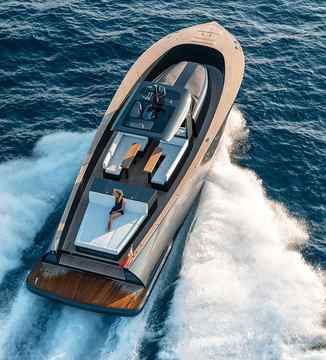
The economic case for going smaller
The financial argument starts with the purchase price itself. A high-end mini-yacht typically sells between €500,000 and €2 million, compared with a starting price well above €10 million for a 35 to 40-metre yacht. But the real savings appear afterwards, across every line of the running budget. Berth fees, calculated by length in most Mediterranean marinas, scale down accordingly. Annual maintenance, insurance premiums and haul-out costs follow the same logic, without the extra expense of oversized equipment such as stabilisers, multiple tenders or large-capacity watermakers found on bigger yachts. Crew costs make the biggest difference of all: a well-designed mini-yacht can be operated without a permanent crew, sparing the owner the salaries, accommodation and social charges of a captain and one or two additional crew members — a line item that alone can exceed several hundred thousand euros a year on a conventional yacht. Taken together, these savings mean a mini-yacht owner can redirect a significant part of their yachting budget toward actual time on the water, rather than the fixed costs of keeping a large vessel ready to sail.
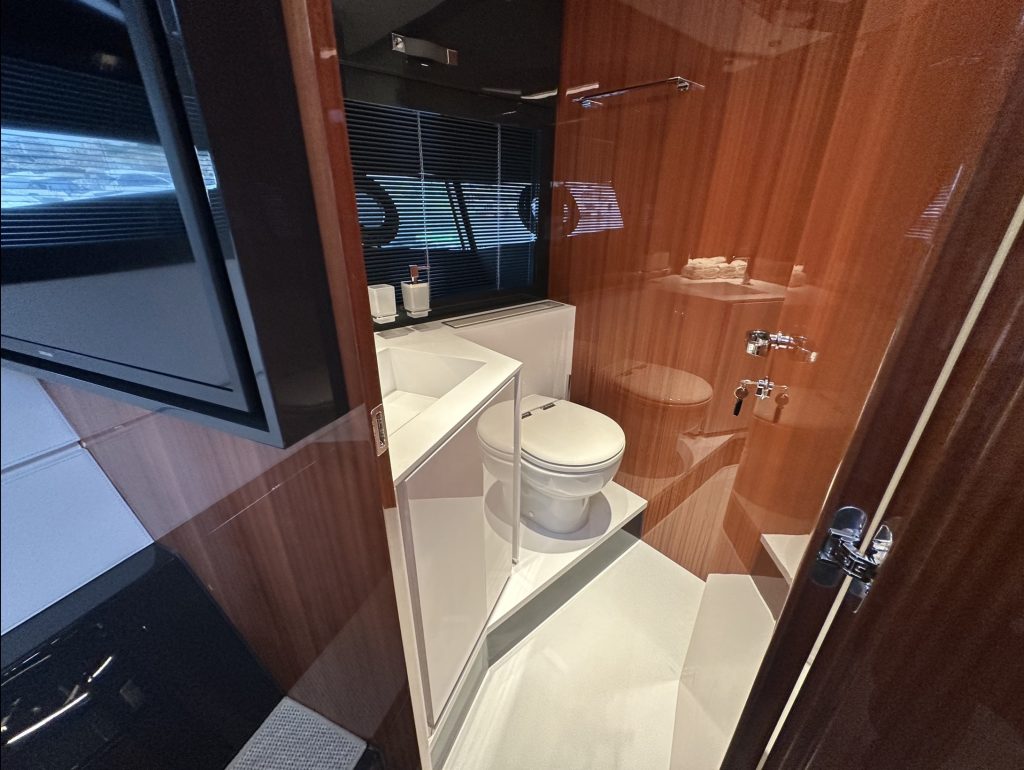
Energy efficiency: the real advantage
The second pillar behind this trend is energy. A shorter, lighter hull consumes mechanically less fuel: at equivalent cruising speed, a mini-yacht can burn three to five times less than a 35-metre yacht. That efficiency is not only about cost per litre — it fundamentally changes which propulsion systems are realistic. On a 9 to 14-metre platform, hybrid propulsion, and even fully electric power for coastal use, become genuinely viable options. On a larger yacht, the weight and volume of the battery packs required make the same technology far less practical, at least for now. Several yards already offer hybrid mini-yachts capable of running in silent electric mode through protected waters, while retaining diesel range for longer passages. This flexibility, combined with a smaller carbon footprint overall, directly answers a demand that is growing across every segment of the market: owners who want to keep sailing without the environmental cost traditionally associated with luxury yachting, and who increasingly see energy sobriety as part of the experience rather than a limitation on it.
Design as the deciding factor
Shrinking a yacht without shrinking the experience demands a far higher standard of design than a larger yacht, where extra volume can absorb inefficiencies. Naval architects working in this segment focus on hulls optimised to reduce drag and fuel burn, modular decks that adapt to different uses throughout the day, and beach-club-style swim platforms that extend the living space out onto the water. Helm stations are built for single-handed sailing, with simplified instrumentation and assisted manoeuvring — bow thrusters, automated docking aids — that make solo navigation genuinely practical rather than a stretch. This discipline has turned the mini-yacht into a genuine testing ground for innovation, where every square metre has to earn its place on board. It is a design philosophy that larger shipyards are now studying closely, borrowing solutions first proven on compact hulls for use on far bigger yachts.
Resale value and charter potential
The economics don’t stop at ownership costs. Mini-yachts also tend to hold their value more predictably than larger yachts, whose resale market is thinner and far more sensitive to shifting tastes and rising running costs for the next buyer. A well-specified 12-metre model from a recognised yard typically finds a buyer faster, and at a smaller discount to its original price, than a 40-metre yacht competing in a narrower, more demanding segment. For owners who see their yacht as an asset rather than a pure expense, this liquidity matters. The category also opens the door to limited, owner-managed charter: a mini-yacht can be chartered for a handful of weeks a season without the operational complexity of running a crewed superyacht programme, offsetting part of the annual budget while the owner is not on board. None of this was really possible in the same way a decade ago, when the segment was still associated with entry-level boating rather than genuine luxury.
Conclusion
Far from being a smaller substitute for the real thing, the luxury mini-yacht has become a category in its own right, built on a rare alignment between financial sense, energy efficiency and design discipline. For first-time buyers and seasoned owners alike, it offers a ratio of pleasure to overhead that few larg
er yachts can match. As hybrid and electric technology continues to mature, and as shipyards keep refining hull shapes and onboard layouts, this segment is set to keep gaining ground — quietly redefining what luxury at sea actually means.