



Introduction
Every year since 1977, the Cannes Yachting Festival has opened the world’s boating season. The 2026 edition, the 49th of its kind, once again confirmed the show’s role as a privileged observatory of the sector’s changes.
Beyond the superyachts that make headlines, a deeper transformation of the market is taking shape, driven by growing demand for energy sobriety and the emergence of new formats, starting with the mini-yacht.
The yachting market in 2026: figures that confirm the sector’s vitality
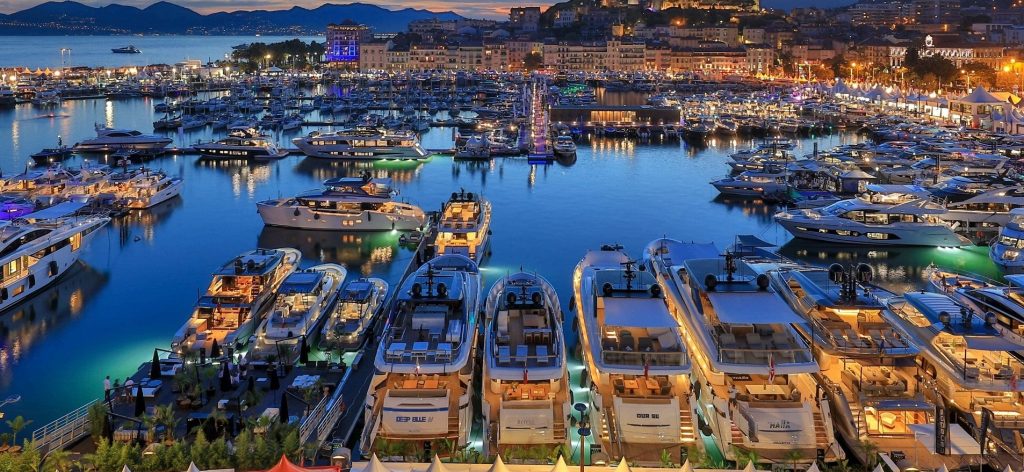
The Cannes Yachting Festival 2026 brought together more than 56,600 visitors, over 680 exhibitors and more than 710 boats and yachts, spread across the Vieux Port and Port Canto. These figures reflect a market that remains dynamic, but these docks should not be mistaken for the market as a whole: the show offers an exceptionally broad snapshot of supply, not a record of boat owners’ actual purchases.
That is precisely what makes it a useful barometer: it shows what shipyards and equipment manufacturers want to put on the water in the coming years.
The major trends reshaping boating
An increasingly segmented offering
The 2026 report highlights an increasingly segmented offering, with a strong presence of multihulls. The show welcomed 95 catamarans, including 51 sailing and 44 motor units, confirming boaters’ growing appetite for this type of architecture, known for its living space and stability.
Energy, a cross-cutting theme of the 2026 edition
Hybrid propulsion, solar power generation, hydrogeneration, new materials, surface treatments and energy optimisation: the solutions on display follow multiple paths, with no single technical architecture yet dominating boating as a whole. The reason is simple: the energy needs of a cruising sailboat, an 8-metre dayboat and a 40-metre yacht have almost nothing in common.
On the propulsion side, electric power is already an obvious choice for smaller units used for coastal or day cruising, while hybrid propulsion stands out as the most coherent compromise for the medium term, allowing owners to sail in silent mode when conditions allow while retaining diesel range for long crossings.
The boat opens up to its surroundings
One of the most visible trends of this edition can be read in the silhouettes: glazing keeps expanding. More broadly, every square metre on board now has to serve several purposes, and the line between indoors and outdoors keeps fading.
The rise of the mini-yacht: an alternative to tomorrow’s energy challenges
This is arguably the most telling trend of the 2026 show: the rise of compact formats, driven by a movement now known as “micro-cruising”.
Micro-cruising, a new sailing philosophy
This movement is driven by shifting lifestyles: shorter, more spontaneous trips, more flexible schedules, and a simple desire to reconnect with the sea. Rather than planning multi-week itineraries with a large crew, a growing number of owners want to be able to step aboard and cast off within minutes. This philosophy reflects a broader aspiration for simplicity and freedom, far removed from the heavy logistics associated with larger units.
Why the mini-yacht appeals to a new generation of owners
The mini-yacht meets two converging expectations: on one hand, a new generation of wealthy owners who favour discretion, quality of life and flexibility over displays of power; on the other, growing pressure for reduced energy consumption. A smaller boat uses less fuel, requires less maintenance and naturally fits a more sober approach, without sacrificing comfort or the pleasure of sailing.
In practice, the most sought-after models share several features: hulls optimised for efficiency, modular decks, beach-club-style swim platforms, and helm stations designed so the owner can sail solo, without a dedicated crew. Day-yachts of roughly 9 to 14 metres continue to dominate this category, thanks to their agility and layouts built for social life on board.
Concrete examples from Cannes 2026
The show featured numerous examples of this pursuit of human-scale efficiency, from compact motor catamarans designed for energy autonomy to fast day-cruising models integrating hybrid or electric solutions wherever the use case allows. Far from a passing trend, this category is steadily establishing itself as a segment in its own right within the yachting market.
Towards a more sober, more intentional yachting industry
Beyond the mini-yacht, the entire sector appears to be moving towards a logic of intentionality rather than excess: smarter technologies, quieter sailing, design built for real-world use rather than aesthetics alone. The market is no longer talking only about boats as objects, but increasingly about programmes of use — an evolution that naturally accompanies the demand for energy sobriety.
Conclusion
The Cannes Yachting Festival 2026 confirms that the yachting market is no longer just a race for size or power. Segmented supply, multiple energy solutions and the rise of the mini-yacht point to a sector undergoing a full recomposition, where sobriety is becoming a criterion in its own right, without giving up the pleasure of sailing. See you in 2027 for the show’s 50th edition, which should mark a new milestone in this transformation.
FAQ
Is a mini-yacht really more eco-friendly than a large yacht?
A compact format structurally uses less energy and fuel than a larger unit, making it a more sober option, even though environmental impact also depends on propulsion type and frequency of use.
What size counts as a mini-yacht?
The term generally refers to units of roughly 9 to 14 metres, sometimes up to 18-20 metres depending on the shipyard, as opposed to superyachts, which often exceed 30-40 metres.
Will hybrid propulsion replace combustion engines in boating?
Not in the short term: hybrid propulsion is establishing itself as a transitional solution, combining silent electric sailing with diesel range for long distances.