


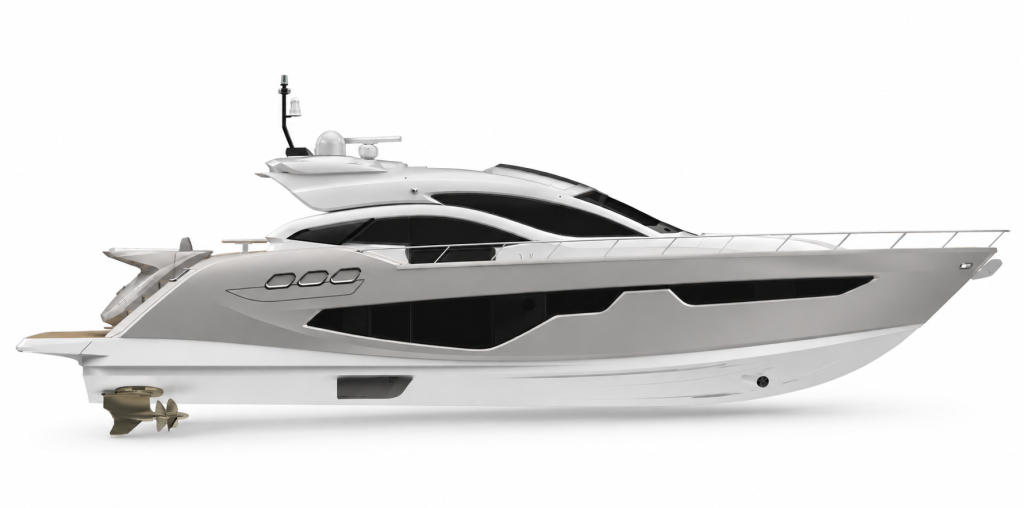
Etimology
The word “yacht” comes from the Dutch term jacht (plural jachten), meaning “hunt.” It was originally used to describe light, swift sailing vessels operated by the navy of the Dutch Republic and the Dutch East India Company.
Emergency of Yachting
Antiquity
Examples of leisure boats among the Phoenicians, Greeks, and Romans
Middle Ages
Creation of the Portuguese caravel
17th Century
Yachting spreads in England
18th and 19th Centuries
Emergence of numerous yacht clubs
20th Century
Explosion in the popularity of yachting in the United States and Europe
21st Century
Yachting as we know it today
Post-war period
Economic growth and technological advances made yachting more accessible
Since 2020
A growing desire for freedom among people: boom in the yachting market


Construction
Originally, all yachts were built from wood, with a wooden keel and ribs covered by planking.
These materials were later replaced by iron or steel in steam-powered yachts. In the 1960s, fiberglass became widely used, and it remains common today along with other materials.
Yachts measuring 79 feet (24 m) or less are often made of fiberglass, while larger yachts are typically constructed from steel, aluminum, or composite fiber-reinforced plastic.